The hidden cost of fast fashion
There was a time when buying a new outfit felt like something to look forward to.
Especially for millennials growing up in the 1990’s and early 2000’s.
Shopping was an event. Going to the local mall to find the perfect outfit for a party, a holiday or a special occasion. We even had a thing called lay-by. The modern-day equivalent is probably Afterpay. But lay-buying an item meant paying it off gradually over weeks or months before finally getting your hands on the prized item, or items.
Essentially clothes were chosen carefully, worn often and, in many cases, passed on to siblings, friends or charity once they had served their purpose.
Today, fashion looks very different.
Over the past two decades, fast fashion has transformed how we shop and, more concerningly, how we view clothes in general.
New collections appear almost weekly, trends move quickly, and clothing has become more affordable than ever before.
It's easy to understand why fast fashion became so popular.
It made trends accessible.
It allowed people to express themselves without spending hundreds of dollars.
And for families navigating rising living costs, affordable clothing can be a necessity rather than a choice.
Conscious living isn’t about judging those realities.
It's simply about recognising that where we have the opportunity, even small, considered choices can make a difference.
And because clothing feels so every day, it can be easy to forget just how many lives are woven into each piece.
What We Don’t See
Clothing has always been more than fabric.
Every piece begins somewhere.
Long before it reaches our wardrobe, it has passed through many hands, travelled great distances and become part of someone else’s story.
Yet when we're shopping—whether in store or online—it's easy to forget that journey altogether.
When we choose a $10 t-shirt or a dress that costs less than dinner out, it’s easy to focus on the bargain. What we don’t always see are the many hands that made it possible.
Cotton is grown.
Fabric is woven.
Garments cut, stitched, dyed, packaged and transported across continents before finally arriving on a store shelf, or your doorstep.
Every step relies on people.
Many of those people work in countries where wages remain extremely low and workplace protections can be limited.
While countless factories operate responsibly, history reminds us why transparency and accountability matter.
Sometimes, the true cost only becomes visible when something goes terribly wrong.
In 2013, the collapse of the Rana Plaza garment factory complex in Bangladesh, shocked the world.
Sadly, more than 1,100 people lost their lives, while thousands more were injured.
For many (myself included), it was the first time the hidden realities behind inexpensive clothing entered public conversation.
It served as a heartbreaking reminder that the people who make our clothes deserve workplaces that are safe, fair and dignified.
The same speed that keeps clothes cheap and trends moving also places pressure on the natural resources behind them.
The Environmental Cost
The story of our clothing doesn't end with the people who make it.
It also affects our land, waterways and communities.
In some parts of the world, rivers have become contaminated by untreated dye and chemical runoff from textile production.
These rivers often support families who rely on them every day—for washing, farming and, in some cases, drinking water.
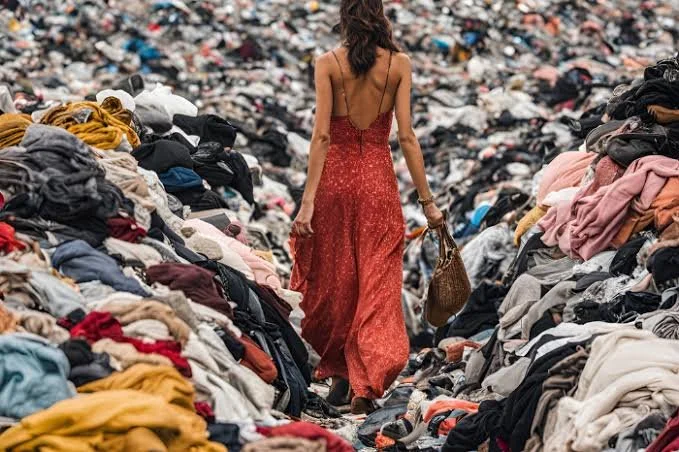
Many garments are also designed to be worn only a handful of times before being discarded. The result is millions of tonnes of clothing and textile waste ending up in landfill every year. Because of the sheer volume, this waste places pressure on our environment and can affect nearby communities and wildlife.
Too often, it is developing countries that bear the greatest burden of managing the world's discarded clothing.
The life of a garment doesn't end when we stop wearing it—it simply continues somewhere else. Reminding us that the choices we make can ripple much further than we ever imagine.
Whether it's the people who make our clothes or the places they eventually end up, every garment has a story that extends far beyond our wardrobe.
Small Ways to Choose Better
This isn't an article about guilt.
Nor is it about expecting everyone to buy expensive clothing or build the perfect ethical wardrobe.
For most of us, that's simply not realistic. I still catch myself choosing convenience over intention sometimes. We all do.
Conscious living isn't about always getting it right—it's about asking better questions, one choice at a time.
Do I truly need this?
Can I choose better quality over quantity?
Could I mend, borrow or buy second-hand instead?
Small choices, made consistently, have a way of adding up.
Every thoughtful decision helps shape the kind of world we want to support.
Choosing with Kindness
None of us will get it right every time.
Perhaps the greatest shift isn't simply buying less, it’s about awareness.
It's remembering that every item of clothing has a story, long before it reaches us.
When we choose with care, we honour the people who made our clothes, the communities that helped produce them and the planet that provides the resources we so often take for granted.
Because kindness doesn't end with the people we know.
Sometimes, it begins with people we'll never meet.
Evolve kindly, lorna x
